Keepers of the Sacred Tradition of Pipemakers

                      Click picture to enter

 Keepers Blog Page

Our Store

Artists Bios

Petition/Quarries

Photo Album

of Pipes


                     Video clip of last years pow wow


 Contacts Maps


Workshops  Presentations


  Pow Wow & Events


STORE

Pipes, Herbs, Videos, CD's, Gift & Jewelry


Keepers History


Membership  Donations


Pipestone Pipes History


Depot History


Quarries Position Paper


Links


Home


Updated April 5, 2008

We hope you enjoy our site! We hope it gives our readers a better understanding of our American Indian culture, the use of pipes; and the history of the pipes by our American Indian Tribes. We do not pretend to know all or to represent one teaching and we welcome your contribution or comments about what we share.  Many people refer to our plains style pipe as a peace pipe.  Peace Pipe is not the proper name for our stone pipes but is how many people identify our special pipes and differentiate our pipestone pipes from those used as pleasure smoking pipes

In our stores you can purchase authentic American Indian Made Arts & Crafts or learn more about the artists. 

Webfetti.comThe Keepers of The Sacred Tradition of Pipemakers

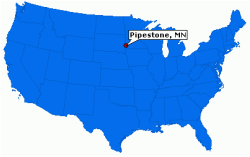
 was formed in 1996 to protect the Pipestone Quarries in Pipestone Minnesota for all Tribal People. At that time there were various groups around Indian country saying the Quarries should belong to them only and not all Tribal nations.

We are a 501C3 non profit Tribal spiritual organization with members all over the world and from more than 35 Tribal Nations.  We are open and welcome all 4 colors to be part of our organization, this includes Asians (Yellow), Europeans (White), Africans (Black) and Indians (Red) .We believe in preserving the Sacred Tradition of the pipe and allowing free access to the Great Pipestone Quarries for all Native American's as they have been for time immemorial and support the art of pipemaking.  We also believe it is important to preserve each tribes unique culture, arts and stories for future generations.

With your help we can unite the four colors of man to help heal mother earth.  The Sacred pipes are just one tool in achieving that goal. We do many presentations in schools and with prison groups to share our tribal cultures and the history of these Pipes and the Pipestone quarries in Pipestone MN.

The Great Pipestone Quarries of Minnesota have been a special place or sacred site for American Indian Tribal people for over 1,000 years. Many nations of people came to these quarries; including the Sac-Fox, Otto, Mandan, Kiowa, Hidatsa, Dakota, Lakota, Cheyenne and Ojibwa as well as many other Native American tribes. The pipes made of this stone, called Catlinite by Europeans, withstood the heat well without cracking and was easily worked with flint tools. Therefore the Pipestone quarried here became a very precious trade item. Trade and travel dispersed pipestone through out the Tribal Nations from Hudson Bay Canada to the Anazazi and Aztec of Mexico. The Pipestone region became the major crossroads for trade. This north south Trade route first used by our tribal people became the corridor the Europeans used and later major highways including highway 75.


We are a non-profit 501 C3 American Indian Spiritual organization our office and stores are located in Pipestone, Minnesota.

Thanks for shopping our gift shops


Pipes Styles


The most common question I get asked about pipes is.Webfetti.com


What is a traditional pipe?


An elder once told me that tradition only goes back one generation to the person who taught you.  Pipe styles popular today like the t-pipe or plains pipe were not popular a few hundred years ago.  Back then you saw mostly elbow pipes, go back a few more years and you would see effigy pipes and lip pipes.  One of the oldest known pipes is called a tube pipe, because it is shaped like a tube or cigar.  You would also need to consider the area or tribe when talking about what is traditional since the black pipe was the pipe of choice for many northern plains tribes and woodland  tribes such as the Ojibewa, but the red pipestone pipes became more popular as tribes like the Dakota and the Lakota moved out to the plains.  Color was not the only difference in pipe styles between the tribes you would see more large elbow pipes, crested pipes or disk pipes in the north and smaller plains, elbows, and effigies to the south.  After deciding on a year and a tribe with a little time you may be able to research and find a traditional pipe for you.  Many times the right pipe for you might be based on your teachings, a dream, or a spirit helper.  Sometimes a pipe just grabs and talks to you and you can't go home without it.